Pawwered Up! Built a Prosthetic for Dogs at The Innovation School @ Makers Asylum
June – October 2025
Biomedical Engineering experience at Makers Asylum
As part of the Makers Asylum Innovation School Program, I collaborated with an interdisciplinary team to develop a 3D-printed bionic prosthetic leg for dogs with limb loss, combining engineering innovation with social impact. Our goal was to design an affordable, motorized prosthetic that enhanced mobility, comfort, and safety for animals in need.

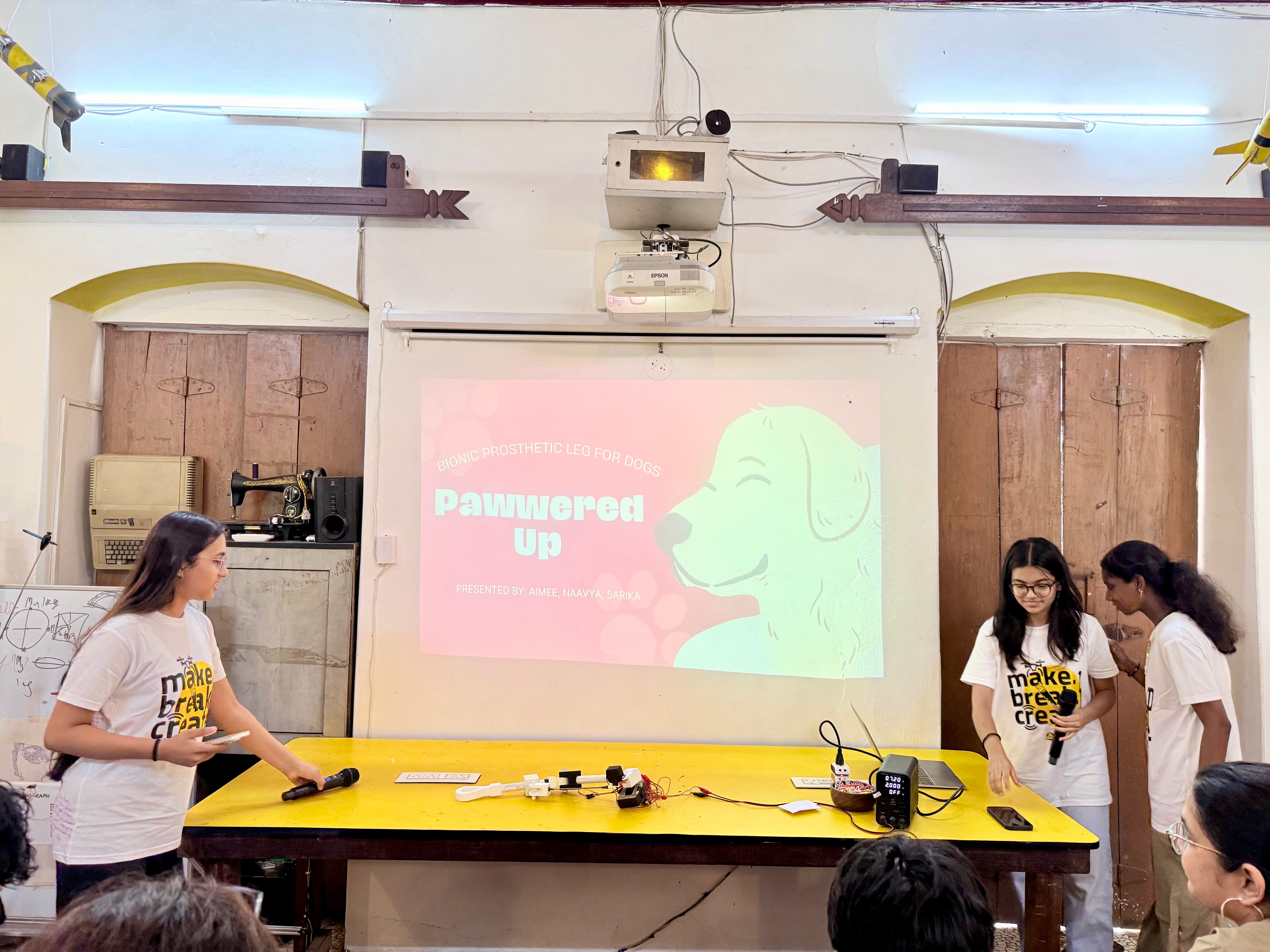
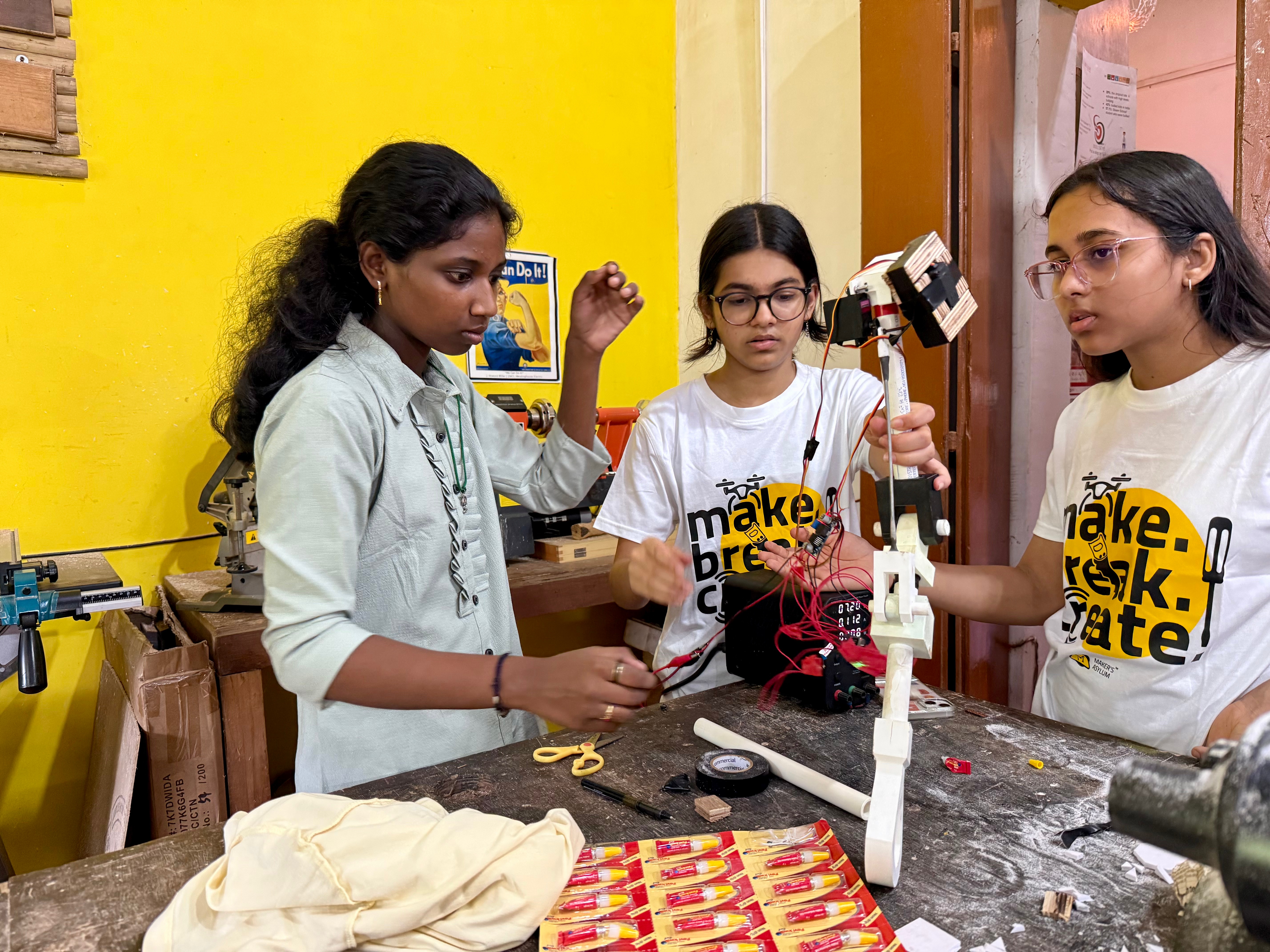
The final design featured a motorized retraction mechanism for adaptive movement, integrated load and limit sensors accelerometers and gyroscopes that enabled responsive motion control. I programmed an ESP32 microcontroller to synchronize sensor inputs with actuator responses using PWM signals and H-bridge motor drivers, optimizing both performance and energy efficiency. To support portability, I designed a modular battery system with a safe charging circuit, ensuring sustained operation without compromising animal comfort.
On the mechanical side, I applied CAD modeling, finite element analysis, and material testing to achieve a lightweight yet durable prosthetic structure. I also gained hands-on experience in fabrication techniques such as laser cutting, engraving, and 3D printing using LightBurn and Bambu Studio, refining the prosthetic’s harness fit and overall ergonomics.


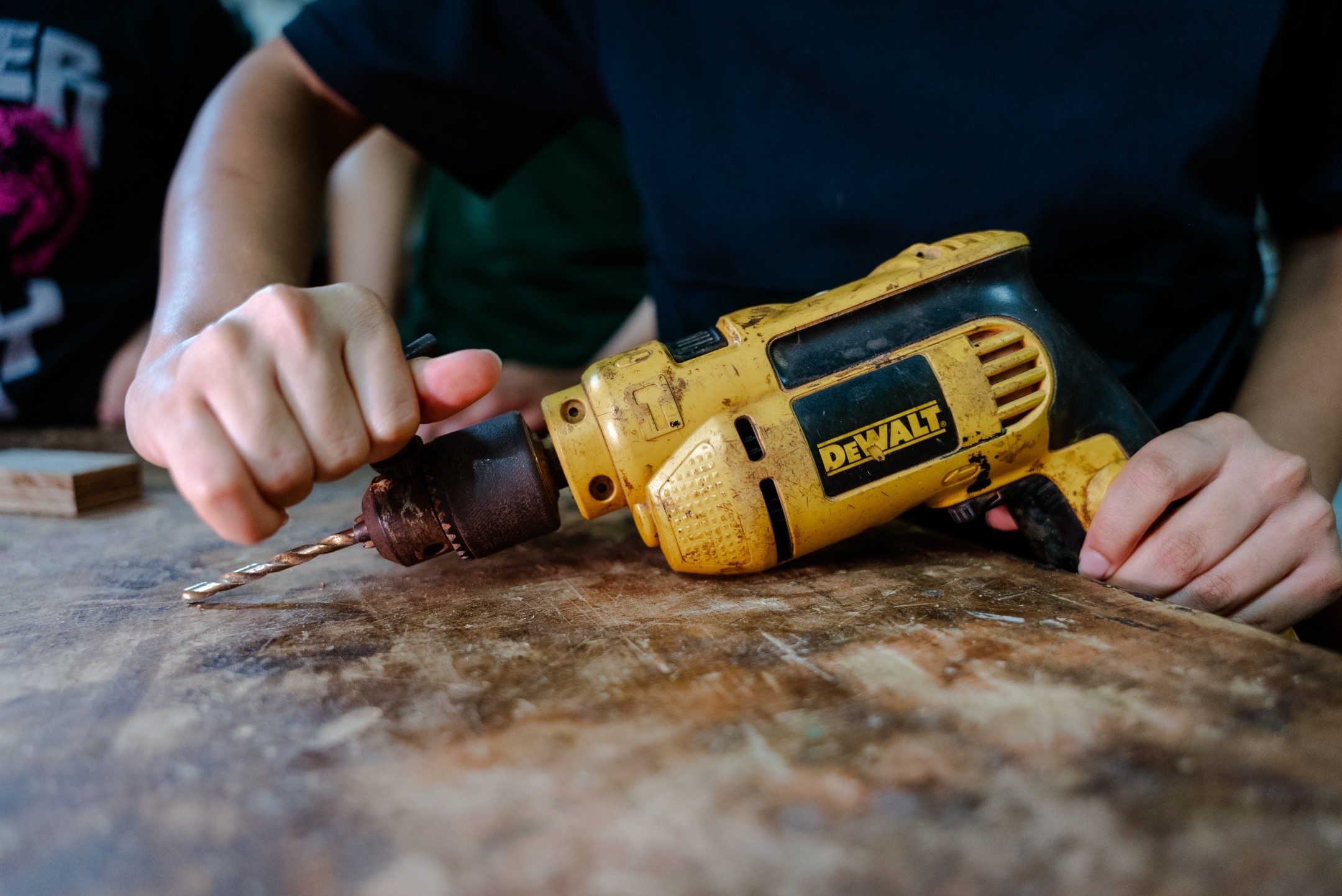


Throughout the process, I worked extensively with professional design tools including Autodesk Fusion 360 for precise modeling and tolerance adjustments, KiCAD for PCB design and circuit layouts, and the Bambu Labs slicer for high-strength print optimization.
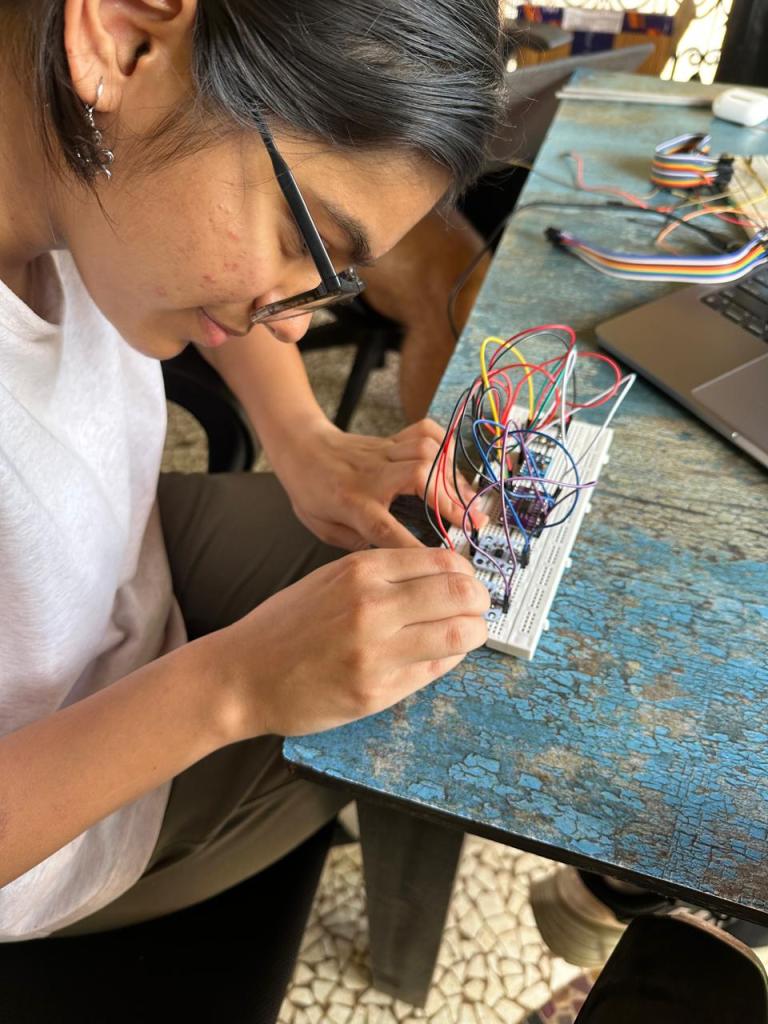
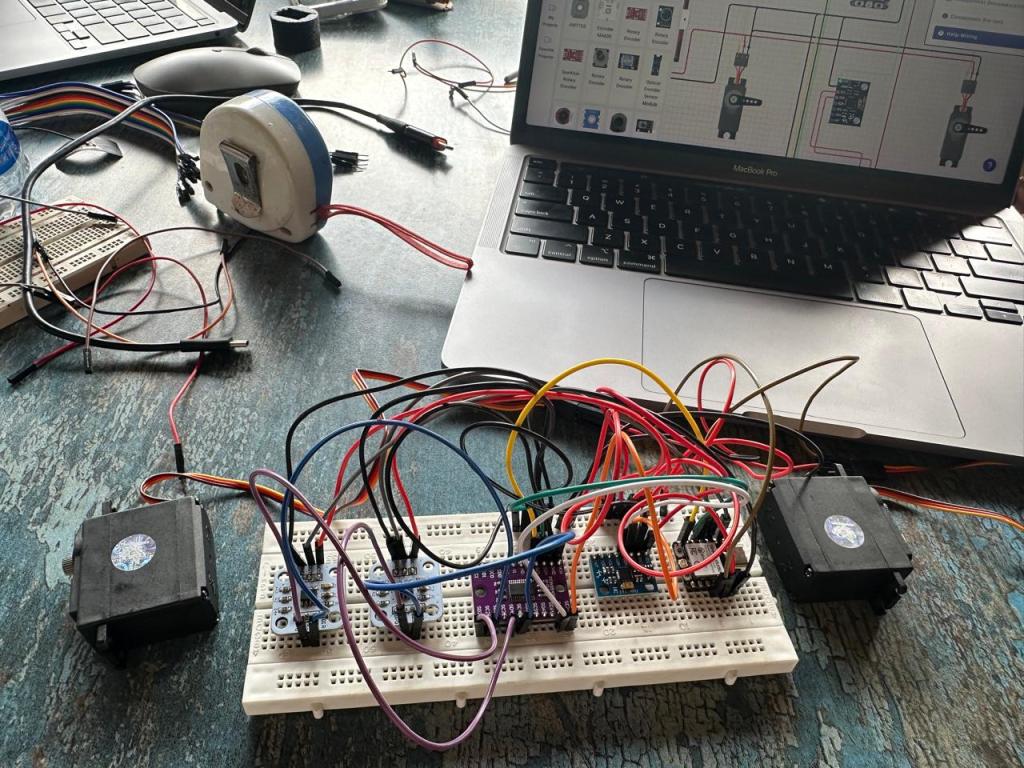

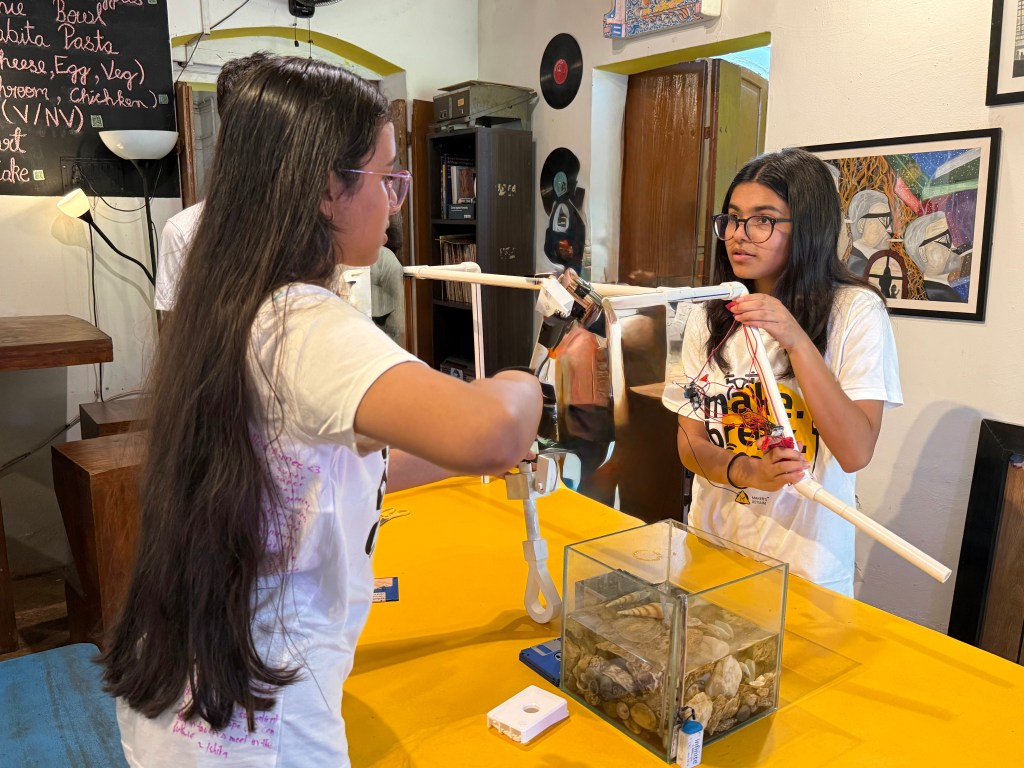
The project came with real-world challenges, from version conflicts in CAD files and fabrication delays due to failed prints, to noisy sensor data and actuator timing mismatches. I addressed these issues through calibration, code optimization, and iterative testing. One of the most valuable experiences came from collaborating with a scholarship teammate who did not speak English. By relying on sketches, CAD visuals, and translation tools, I learned to bridge communication gaps with empathy and adaptability.
Ultimately, Pawwered Up! reinforced my belief that engineering is most powerful when guided by empathy. It was a reminder that innovation doesn’t just solve problems — it restores mobility, comfort, and dignity where it’s needed most.

 Naavya Shrivastava